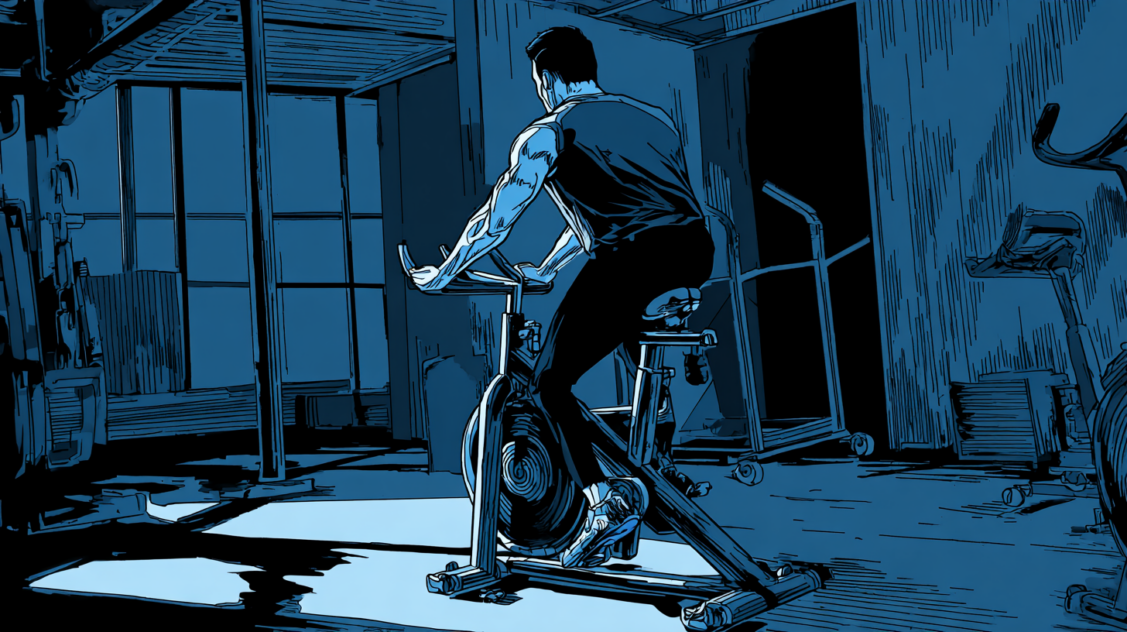
For many cyclists, bad weather creates a familiar dilemma. You want to stay consistent, protect your fitness, and keep your routine intact, but the conditions outside make riding less appealing or less safe. Rain, cold wind, icy roads, poor visibility, and stormy weather can quickly turn a normal training ride into something stressful, unproductive, or simply unpleasant. This is exactly where the indoor trainer becomes valuable.
But an indoor trainer is not always a full replacement for outdoor riding. In some situations, it is the smartest possible choice. In others, it only covers part of what a real ride gives you. The difference matters, especially for amateur cyclists who want to train sensibly without losing motivation, confidence, or connection to the sport.
The key is not to ask whether the trainer is “better” or “worse” than riding outside. The better question is more practical: what is the goal of today’s ride, and can indoor training serve that goal well enough?
When the indoor trainer is the smarter option
The indoor trainer is a very reasonable substitute when weather conditions make outdoor riding unnecessarily risky. Heavy rain, strong crosswinds, icy corners, slippery leaves, poor road visibility, or near-freezing temperatures can all change the character of a ride. What should have been a useful endurance session may become a constant exercise in caution. In those situations, the trainer is not a lazy alternative. It is a disciplined decision.
This is especially true when the goal of the day is structured fitness work. If you planned intervals, cadence drills, tempo blocks, or a controlled aerobic session, indoor training can often deliver the work more effectively than outdoor conditions. There are no traffic lights, no unpredictable descents, no wet braking zones, and no interruptions from weather. You can focus entirely on the purpose of the session.
That makes the trainer particularly useful in winter, during unstable shoulder seasons, or on days when time is limited and the forecast is poor. Instead of losing the session altogether, you can preserve consistency. For many riders, that consistency matters more over the long term than insisting on outdoor mileage at all costs.
A strong substitute for fitness, not for every part of cycling
This is where many cyclists become either too dismissive or too idealistic about indoor riding. The trainer can replicate the physiological side of cycling very well. It can maintain endurance, improve threshold work, sharpen interval quality, and support regularity. In some cases, it can even produce better training precision than outdoor riding.
What it does not fully replace is the broader experience of being on the bike in the real world. Outdoor rides involve changing terrain, road positioning, balance, cornering, bike handling, wind management, attention shifts, and the simple mental flow of moving through space. The trainer cannot reproduce that. It builds fitness, but it does not teach you how to descend confidently on a damp road or adjust instinctively to changing surfaces.
So the trainer is an excellent replacement when the purpose is physical training. It is only a partial substitute when the purpose includes outdoor skills, movement quality, and the sensory side of riding.
Bad weather does not always mean “stay inside”
It is also important not to overcorrect. Not every unpleasant day requires indoor training. Light rain, cool temperatures, gray skies, or damp roads do not automatically make outdoor riding a bad choice. In fact, one of the most useful things a cyclist can develop is weather judgment. Some riders move indoors too quickly and gradually lose comfort outside unless conditions are perfect.
That can become a problem. Cycling is not only about fitness. It is also about adaptability. If every slightly uncomfortable day sends you to the trainer, your tolerance for real riding conditions may shrink. You may preserve your legs while losing some resilience and confidence.
A good rule is this: if the weather is uncomfortable but manageable, an outdoor ride may still offer more overall value. If the weather introduces meaningful safety concerns or turns the planned session into something completely different, the trainer becomes the smarter choice.
The trainer works best when the goal is clear
Indoor riding becomes much more useful when it is chosen intentionally, not emotionally. Many cyclists jump onto the trainer simply because the weather looks bad and they do not want to decide what to do instead. That often leads to unstructured, mentally flat sessions that feel longer than they are.
The trainer works best when you know exactly what it is replacing. Is it standing in for an easy recovery ride? A threshold workout? A short endurance session? A consistency day during a stressful week? Once the role is clear, the session becomes easier to execute and easier to value.
This is one reason indoor training can be so effective during busy periods. A 50-minute trainer session with a clear purpose can often do more for your fitness than a poorly timed outdoor ride done in cold rain out of guilt. The trainer is strongest when it protects the quality of the training week, not just when it offers shelter from bad conditions.
Where indoor riding becomes a compromise
The limits appear when cyclists begin treating the trainer as a total replacement for riding outside over long periods. This is where the compromise becomes more obvious. Even if the fitness remains solid, something can start to fade: bike feel, confidence in movement, comfort with changing conditions, and simple emotional freshness.
Outdoor riding gives feedback that the trainer cannot. It teaches pacing against terrain, not just resistance. It teaches subtle shifts in body position. It teaches how to relax into motion. It also gives a kind of mental renewal that static indoor riding often lacks. For many people, this is not a romantic detail. It is part of why they stay committed to cycling at all.
So if indoor riding starts to replace outdoor riding too often, especially beyond periods of genuinely bad weather, it may protect physical consistency while reducing the richer qualities that make a cyclist feel complete on the bike.
Mental freshness matters more than many riders admit
There is also a psychological dimension. Some cyclists tolerate indoor training well. Others find it draining, repetitive, or emotionally narrow. A trainer session can be efficient, but efficiency is not the only thing that sustains a riding habit.
Bad-weather weeks are easier to manage when indoor sessions are used strategically rather than excessively. Two or three purposeful trainer rides can keep momentum alive. But if every ride becomes an indoor session for weeks on end, motivation can flatten. The body may still be training, but the mind begins to disconnect from the pleasure of cycling.
This is why variety matters. Even in colder or wetter months, it often helps to keep at least some outdoor riding when conditions are safe enough. That balance protects both fitness and identity. You are not only maintaining numbers. You are staying in touch with the feeling of being a cyclist.
A sensible standard for making the choice
The most useful way to decide is to evaluate three things: safety, session purpose, and training value.
If safety is seriously compromised, the trainer is the right call. If the goal is a structured session that indoor riding can deliver more cleanly, the trainer is often the better option. If the weather is not ideal but still manageable, and the ride would help preserve confidence, handling, and enjoyment, going outside may offer more complete value.
This approach prevents two common mistakes. The first is romanticizing toughness and riding outside when the session becomes unsafe or pointless. The second is using the trainer too quickly and slowly reducing your comfort with real-world riding.
Smart replacement, not total equivalence
The indoor trainer is one of the most useful tools a cyclist can have during bad weather. It protects consistency, supports structured work, saves time, and reduces unnecessary risk. In many situations, it is not just an acceptable substitute for outdoor riding. It is the better decision.
But it is still not the same thing as being outside. It cannot fully replace bike handling, environmental awareness, movement through space, or the mental richness of a real ride. That does not make it inferior. It simply means it should be used with honesty.
The smartest cyclists usually do not treat indoor and outdoor riding as rivals. They treat them as different tools serving different purposes. In bad weather, the trainer becomes a strong substitute when safety drops or training quality would otherwise collapse. It becomes a compromise when it starts replacing too much of the real riding experience for too long.
That distinction is what keeps indoor training useful, balanced, and sustainable.
