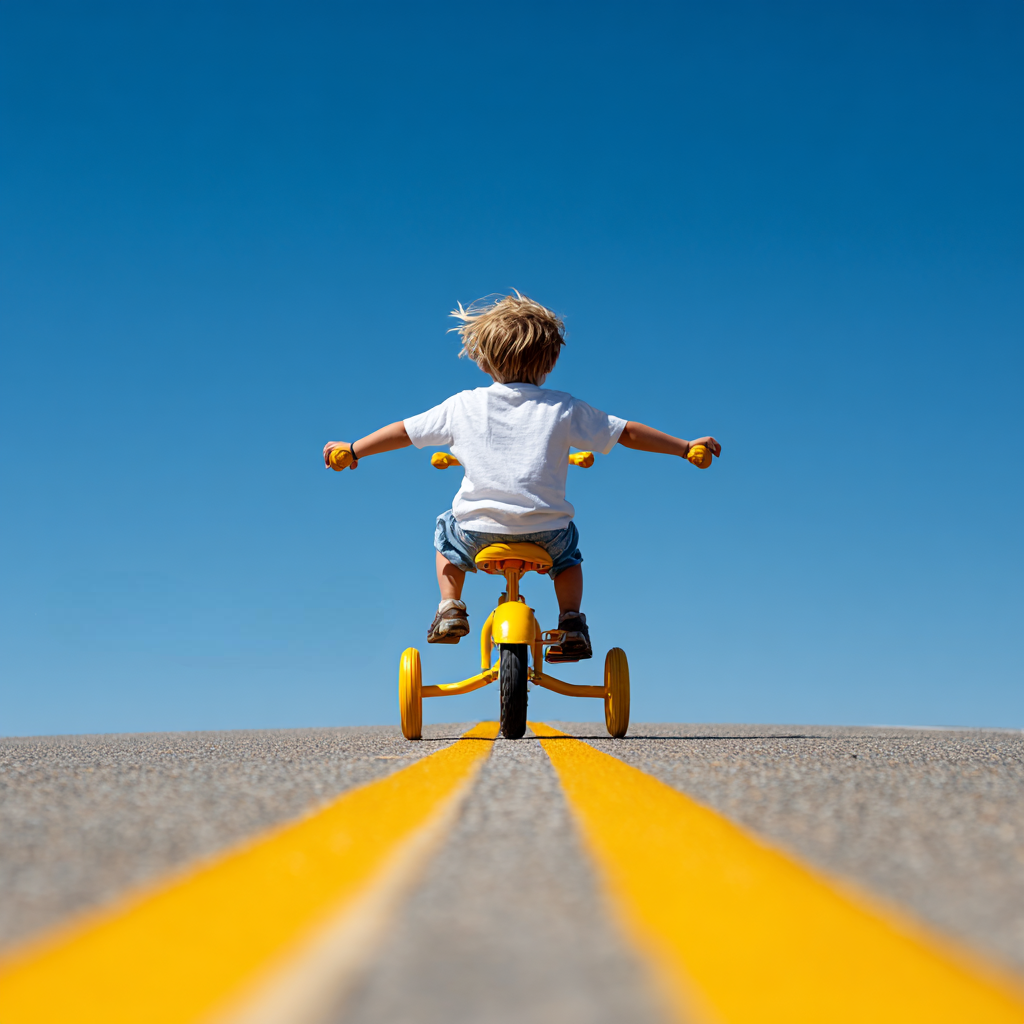
There is a special kind of joy that appears before children can fully describe it. Adults often look for words, reasons, and explanations. Small children do not need any of that. Their happiness is often immediate, physical, and visible. You can see it in the way they run toward something, repeat it again and again, and protest the moment it ends. That is exactly what happens with a child and a bicycle.
Long before many toddlers can explain what they feel, they already know what freedom feels like in motion. They may not be able to say, “I like the independence,” or “This gives me confidence,” but their body says it clearly. The excitement in their face, the concentration in their posture, and the pride after even a short ride all reveal something important: the bicycle is not just a toy. For many young children, it becomes one of the first real experiences of control, movement, and self-directed happiness.
Happiness arrives through movement first
Adults sometimes underestimate how deeply children experience the world through motion. Before language becomes strong, movement is one of the main ways they explore, test boundaries, and feel capable. They crawl, climb, push, pull, carry, run, and spin. They learn with their whole body before they can explain anything with precision.
A small bicycle or tricycle fits naturally into this stage of development. It gives the child a way to move farther, faster, and more intentionally than before. That is thrilling. It is not only about speed. It is about cause and effect. The child pushes, and the bicycle moves. The child turns, and the direction changes. The child stops, and the world pauses. This connection between action and result is deeply satisfying.
That is why children can seem so proud on a bicycle even when the ride itself is very simple. The emotional reward is larger than adults often realize. A child is not just sitting on a cute little vehicle. The child is experiencing agency.
The bicycle becomes a first taste of independence
One reason bicycles mean so much to very young children is that they offer a rare form of independence at the right scale. Toddlers live in a world largely controlled by adults. Adults decide where to go, how fast to move, when to stop, and what is safe. On a bicycle, even in a small and supervised environment, the child suddenly gains a new feeling: “I can do this.”
That feeling matters. It is one of the early building blocks of confidence. The child does not need to understand the idea of independence in abstract terms. It is enough to feel it. Riding from one point to another through their own effort creates a sense of personal power. The bicycle becomes a small space where the child is not only being carried through the world, but actively participating in it.
This helps explain why some children become attached to their bicycle so quickly. To adults it may look like a simple object. To the child it can feel like an extension of newly discovered freedom.
Joy and concentration live together
Another beautiful thing about young children on bicycles is the combination of joy and seriousness. They may laugh one moment and look intensely focused the next. That is because riding is fun, but it is also meaningful work. The child is balancing attention, movement, curiosity, and effort all at once.
This is one reason bicycles are so engaging for toddlers. They challenge the body without feeling like a task. The child is learning coordination, timing, spatial awareness, and decision-making, but none of it is presented as instruction. It arrives through play. This makes the experience unusually powerful. Children often learn best when they are emotionally invested before they are verbally aware of what they are learning.
A bicycle does exactly that. It turns development into delight.
The emotional language of “again”
Parents often know a child loves something not because the child says so clearly, but because the child wants it again and again and again. That repetition is one of the strongest signals of genuine happiness in early childhood. A child may not have the language to explain the experience, but the desire to repeat it tells the story.
Bicycles often create this reaction immediately. One short ride leads to another. A few minutes outside become difficult to end. The child wants one more turn, one more circle, one more little stretch of path. This is not only excitement. It is emotional recognition. The child has found an activity that feels good in a complete way: physically active, mentally absorbing, and emotionally rewarding.
That is why the bicycle often becomes part of a child’s early identity. It is not just something they use. It becomes something they associate with feeling strong, happy, and alive.
More than entertainment
It is easy to describe a child’s bicycle as a source of fun, and of course it is. But the experience usually goes deeper than entertainment. Riding helps children build confidence in their own body. It gives them a first sense of rhythm and effort. It teaches them that progress can come from repetition. It introduces manageable risk, small decisions, and the pleasure of mastering something that once felt uncertain.
This matters especially because so much of early confidence is physical before it becomes verbal. A child who feels capable while riding often carries some of that confidence into other experiences too. The bicycle becomes part of a larger emotional pattern: trying, wobbling, improving, and enjoying success.
That is one reason adults remember early bicycle experiences so vividly. Even simple first rides often stay in memory because they were about more than movement. They were about becoming slightly bigger than before.
Why children show happiness before they can explain it
Young children do not separate emotion, body, and action the way adults do. They often express joy through movement long before they can explain its source. A bicycle gives that joy a visible form. The child lights up not because they have reflected on what the bicycle represents, but because they feel it directly.
You can see it in their urgency to get on, their refusal to stop, their proud glances back, and the intense seriousness with which they approach something that adults might call play. For them, it is not “just play.” It is discovery.
This is what makes the image of a small child on a bicycle so moving. The child still cannot tell you everything that is happening inside, but nothing essential is hidden. The happiness is fully there, written in movement.
A small bicycle, a big feeling
In the adult world, bicycles can mean many things: fitness, speed, sport, travel, routine, freedom, even identity. For a very young child, the meaning is simpler and somehow purer. The bicycle becomes one of the first tools through which happiness feels active rather than passive. It is something the child does, not something merely given to them.
That is why the joy looks so complete. The child is not only amused. The child is engaged, challenged, proud, and free in a way that fits their age perfectly. They do not need the words yet. The body already understands.
He still can’t explain why he’s happy, but he can show it on a bicycle. And perhaps that is one of the clearest forms of happiness there is: not analyzed, not translated, just lived.
